

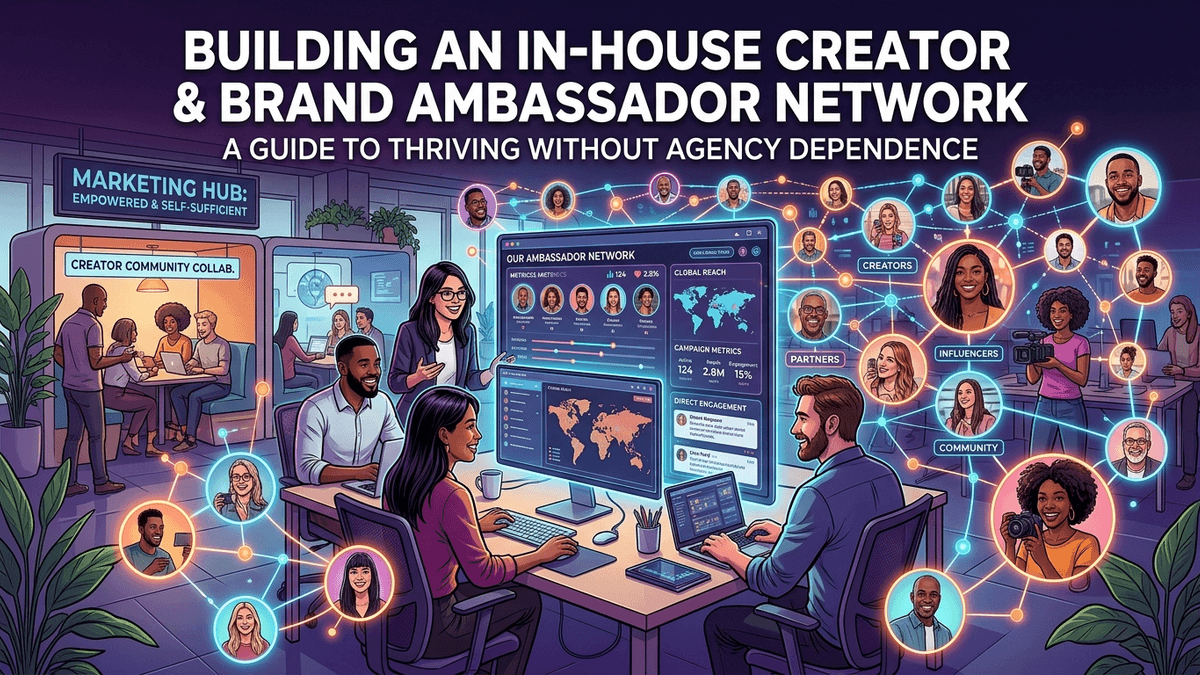
Skip costly agency retainers and slow email chains. A step-by-step roadmap for brands to build, manage and grow their own in-house network of loyal creators.
An in-house creator network is a group of brand-aligned content creators that your company recruits, pays and manages directly, without an agency in the middle. You build it by defining your ideal creator profile, recruiting a loyal core group, designing incentives that keep them engaged and running contracts, payments and content through a platform. Done well, it cuts intermediary costs, speeds up delivery and keeps the creator relationships inside your brand.
Many companies take their first step into influencer marketing by calling a traditional advertising or PR agency. A few months later, most of them share the same frustrations:
- Fixed monthly retainers running to tens of thousands of lira.
- Intermediary margins of 40–60% between what the creator actually receives and what the agency invoices the brand.
- Slow, bureaucratic email chains that take days for a single revision or question.
- Worst of all, when the campaign ends, the creator relationship stays with the agency, not with the brand.
In 2026, modern companies are moving away from the intermediary model and building their own in-house creator networks. This guide explains how to build a creator programme from scratch and how to cut your costs roughly in half.
Agency Model vs. In-House Platform Model
| Traditional agency model | In-house platform model | |
|---|---|---|
| How the brand pays | Fixed fee plus around 40% commission to the agency | Direct communication and transparent pricing through Influencer Marketplace |
| Path to the creator | Brand, then agency, then influencer | Brand to a verified creator pool, with direct contracts and escrow |
| Communication speed | Slow, via intermediaries | Direct |
| Who owns the relationship | The agency | The brand |
When you build the relationship directly with creators, your budget is not eaten up by intermediary fees, and creators tend to embrace your brand far more genuinely.
Four Steps to Building an In-House Creator Programme
Step 1: Define your brand ambassador criteria
You cannot work with everyone. Write an ideal creator profile (a creator persona) that reflects your brand values:
- Tone and style: friendly, humorous, educational or professional.
- Category expertise: tech enthusiasts, healthy eaters, parents and children, and so on.
- Content quality: sound, lighting and editing skills.
Step 2: Build your own "Core 20" creator list
Your first goal is a loyal pool of 20 creators. They become trusted partners who can produce content within 24 hours whenever a new product launches, a sale period starts or you need content urgently.
Step 3: Design a two-way, win-win incentive model
To keep creators in your network, do not offer only one-off payments:
- Give them early access to new products before they reach the market.
- Define a fixed fee for regular monthly base content.
- Keep motivation high with affiliate models that pay extra commission as they drive sales.
Step 4: Create an asset library
Categorise every raw video and photo you receive from creators and store it in an internal digital archive. Rotate this content across Meta ads, email newsletters and your website to get maximum value from it, within the usage rights you have agreed.
Managing Legal and Financial Risk Without an Agency
A major reason companies use agencies is that they do not want to deal with contracts, invoicing and payments. With a platform infrastructure, those obstacles largely disappear:
- Escrow payment: your money stays safe; nothing is paid until the creator delivers the content and you approve it.
- Standard copyright and advertising rights contracts: ready-made templates that have passed your legal team's review help prevent copyright disputes.
- Corporate invoicing: a legal invoicing setup fully compliant with Türkiye's withholding tax (stopaj), VAT (KDV) and VAT withholding (tevkifat) rules.
Creator CRM and Communication Routines
As the network grows, do not lose relationships in spreadsheets:
- Record each creator's birthday, clothing sizes, interests and shipping address.
- Strengthen the sense of belonging by sending small surprise gifts on special occasions.
- Set up a private community channel on WhatsApp or Slack and announce campaigns there first.
A short note after every collaboration, covering what worked, turnaround time and audience response, also makes it much easier to decide who to brief next time.
The Financial Case: In-House Network P&L
Companies that use an in-house model instead of a traditional agency typically see:
- Agency commission savings: an average annual cash saving of 45%.
- Faster content production: a move from three-week approval cycles to 48-hour turnarounds.
- Stronger brand loyalty: genuine ambassadors who truly adopt the product and also mention it organically.
Running Your Network on Influencer Marketplace
You do not need to hire a separate five-person team. Influencer Marketplace provides a corporate operating system for brands to manage their in-house creator networks end to end:
- Find the best-fit names among thousands of verified profiles by category, demographics and budget in a single click.
- Create your own private creator lists and add creators to your favourites.
- Manage briefs, revision requests and performance analysis from one screen.
If you are still weighing the options, our comparison of influencer agencies and platforms sets out the trade-offs.
Frequently Asked Questions
How many creators should an in-house network start with?
Start with a loyal core of 20 creators. That is enough to cover launches, sale periods and urgent content needs, while still being small enough to manage relationships personally.
How much can a brand save by leaving the agency model?
Agency intermediary margins can reach 40–60% of what the brand pays. Companies using an in-house model see an average annual cash saving of 45% on agency commission.
How do I keep creators engaged over time?
Combine early access to new products, a fixed fee for regular monthly content and affiliate commission on the sales they drive. Small gestures such as surprise gifts and a private community channel strengthen the relationship.
Do I need a legal team to work without an agency?
You need contracts your legal team is comfortable with, but a platform reduces the operational load: escrow payments, standard rights contracts and compliant invoicing are handled in one place. In Türkiye, that includes invoicing that complies with withholding tax, VAT and VAT withholding rules.
Stop paying intermediaries a fortune. To build your own independent, sustainable creator network, create your brand account on Influencer Marketplace.