

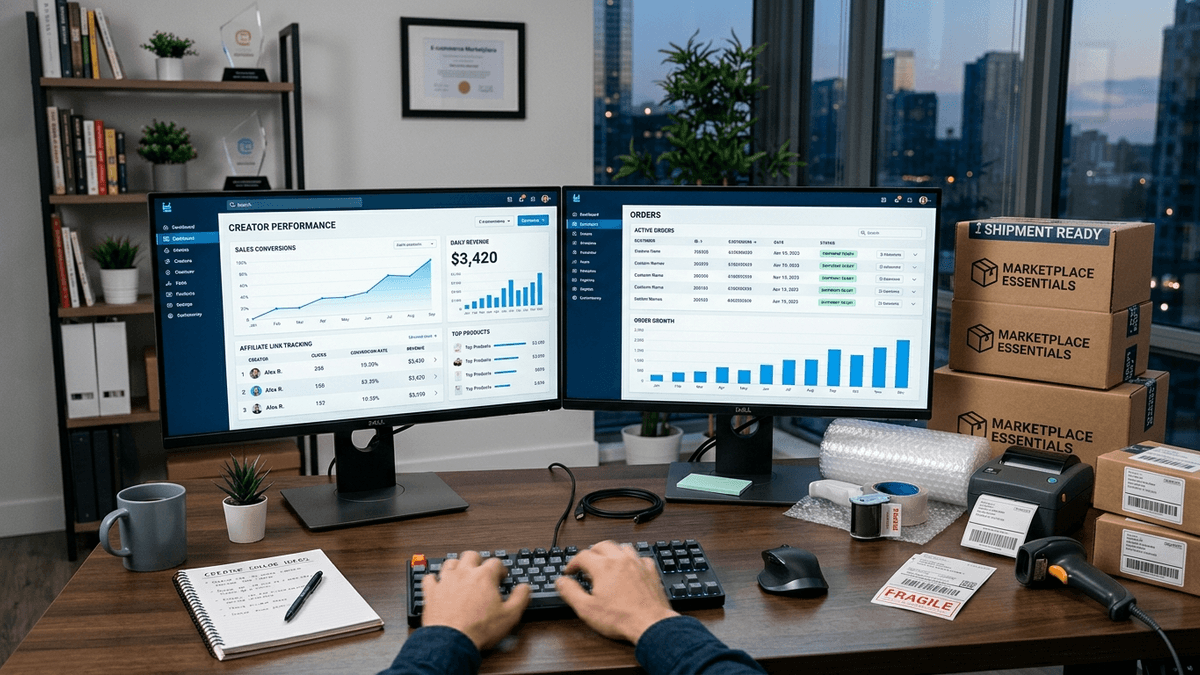
A practical guide for marketplace sellers to find commission-based affiliate creators, set category commission rates and pay only on confirmed, non-returned sales.
Marketplace sellers on platforms such as Trendyol, Hepsiburada, Amazon or n11 find commission-based creators by targeting accounts that already share shopping links, filtering for creators who accept affiliate work, and offering a commission attractive enough to be recommended over competitors. In a cost-per-sale (CPS) affiliate model you do not pay a large fee up front; you pay a percentage of the revenue from real customers who complete a purchase through the creator's link, typically in the 8–20% range. This guide explains how the model works, where to find the right creators, how to set commission rates and how to protect your margin from returns.
Why marketplace sellers prefer commission-based creators
The biggest frustration for marketplace sellers is paying an advertising fee in advance and getting no orders in return. Flat-fee influencer promotions do not always come with a sales guarantee. A commission model shifts most of that risk: the creator earns when your store earns. That makes it one of the most sustainable ways for marketplace sellers to work with creators, especially smaller shops that cannot afford to test several flat-fee posts. If you want to weigh the two models side by side, read our comparison of flat fees and sales commission.
1. How the commission-based model works
The process is simple and transparent:
- An affiliate (revenue-sharing) link or discount code specific to your product is created in your marketplace seller panel or on Influencer Marketplace.
- The creator shares the link in Instagram stories with a "swipe up" or link sticker, or places it in their TikTok bio.
- The shopper clicks the link and completes the order within the attribution window, for example 24–48 hours.
- Once the order has been delivered and the return period has passed, the creator receives the commission they have earned.
For the wider legal and operational framework of collaborations, see our guide to influencer and brand collaboration.
2. How to find creators who are willing to share links
Not every creator accepts commission-only work. Instead of chasing accounts that only work for a flat fee, look for profiles that are already inclined towards affiliate partnerships:
- Accounts that regularly share marketplace collections or favourites. Creators who post things like "I've left the link to this dress" or "my favourite home organisers" in their stories are already earning from this model. When you offer them a product that is already selling well, with strong reviews and a competitive price, they are usually happy to add it to their list.
- The Influencer Marketplace performance network. On Influencer Marketplace you can use the affiliate filter to find creators who accept commission-based work and whose past sales performance has been verified.
- Category review channels on YouTube and TikTok. Creators who make videos about practical kitchen tools, value-for-money tech or "what's in my make-up bag" content are a natural fit for adding your product links to their video descriptions.
For the requirements of marketplace creator programmes in Türkiye, see our Trendyol influencer application guide.
3. Commission rates and incentives
To make a creator recommend your product instead of a competitor's, the commission has to be attractive. The ranges below are suggested starting points by category; check them against your own margins before you publish an offer.
| Product category | Average profit margin | Suggested commission rate | Extra incentives |
|---|---|---|---|
| Fashion and textiles | 40–60% | 12–18% | Free sample product |
| Cosmetics and personal care | 50–70% | 15–20% | Bonus for 50+ sales a month |
| Home, living and decor | 35–50% | 10–15% | Extra coupon code for followers |
| Consumer electronics | 15–25% | 5–8% | Advantage of a higher basket value |
To work out a rate that stays profitable, our guide on calculating influencer commission rates walks through the formula.
4. Tactics that lift affiliate sales
- Send a free sample. A creator cannot sell a product convincingly if they have never held it. Even on a commission-only agreement, ship the product they will promote to them as a gift.
- Combine the link with a coupon. Instead of only sharing a link, offer something like "10% off in the basket with code AYSE10". A clear, creator-specific offer gives followers a reason to buy now and makes sales easier to attribute. Our comparison of links and discount codes explains how each is tracked.
- Keep stock and price stable. If the product sells out or the price jumps the moment the creator shares the link, you lose sales and damage the creator's trust in you.
5. Returns and net profitability
In e-commerce, what matters is net profit, not gross revenue. When a shopper uses their right of withdrawal (14 days under consumer law in Türkiye) or refuses delivery and sends the parcel back, no commission should be paid on that order. Put these controls in place:
- A confirmation window. Finalise commission payments no earlier than 21 days after the order date. That gives time for returned parcels to be recorded and deducted from net sales.
- Shipping and packaging quality. However well a creator presents the product, a damaged or late delivery leads to negative reviews and a lower seller rating.
- A weekly funnel review. Compare how many clicks and sales each creator brought, using weekly spreadsheets or marketplace reports, and keep working with your five most profitable creators.
6. Building long-term affiliate partnerships
One-off link shares create a short-term spike in sales, but lasting results come from regular repetition. Build a permanent network of 5–10 creators who feature your products every month in formats such as "favourites of the month", "what's in my bag?" or seasonal sale roundups. Keep them motivated with tiered commission bonuses, for example an extra 3% for creators who pass 100 orders in a month.
Frequently Asked Questions
What happens to the commission on returned orders?
Under marketplace and affiliate rules, if the shopper uses the legal right of withdrawal and returns the product, the commission for that order is cancelled. Creators are paid only on confirmed net sales.
Can small sellers find affiliate creators too?
Yes. Many micro influencers prefer working with boutique sellers that offer higher commission and fast shipping over large brands. A strong product, good reviews and reliable delivery matter more than the size of your store.
Where can I track the link performance of each creator?
On the Influencer Marketplace panel you can see in real time how many clicks each creator's link received, how many add-to-cart actions it generated and how many confirmed orders it brought.
Commission-based creator partnerships let marketplace sellers grow sales while paying only for results. To start building your affiliate creator network, create a brand account.