

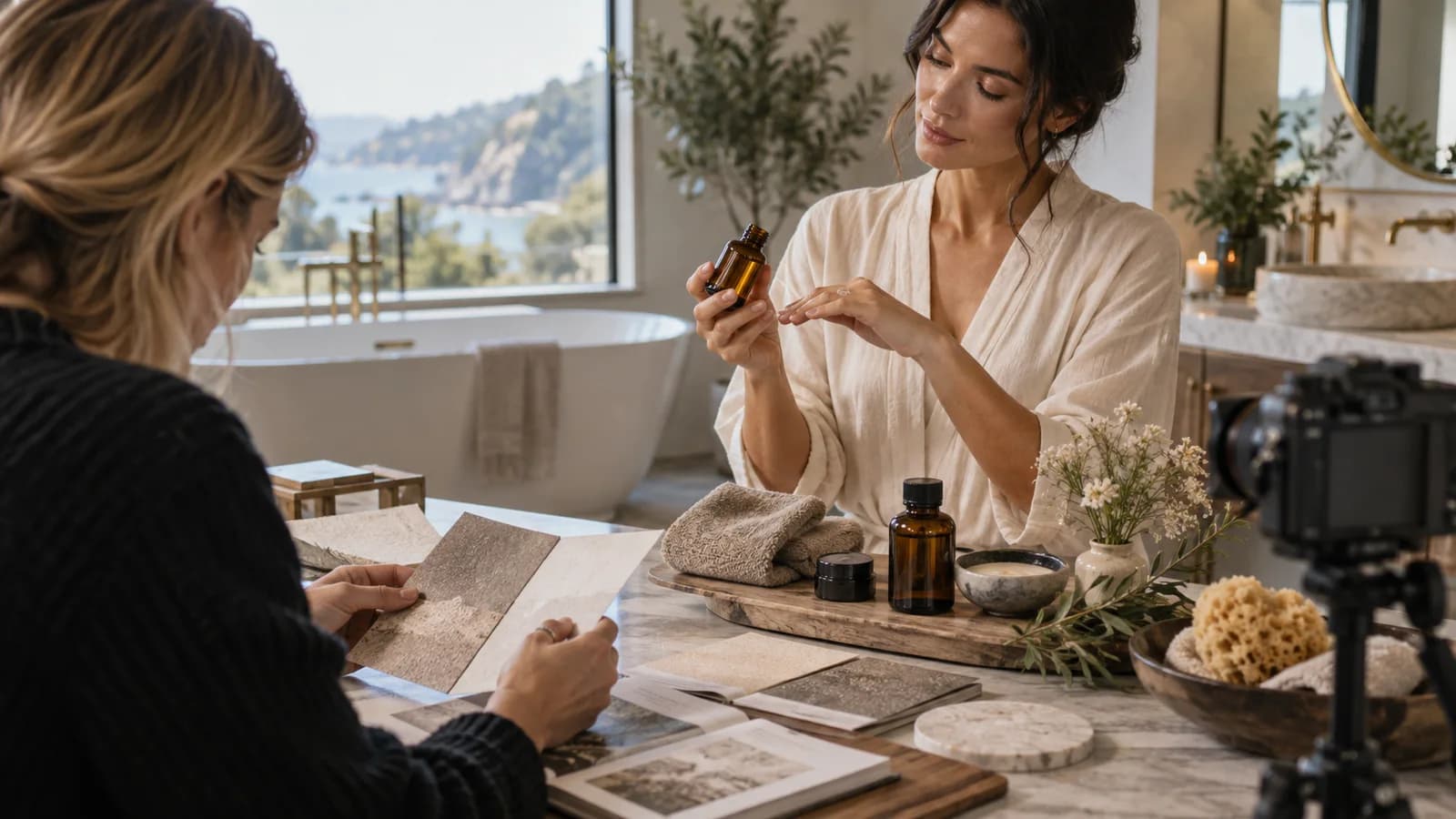
Beautiful lighting is not enough evidence when hiring skincare UGC creators. A useful creator shows texture clearly, follows the product's directions and avoids inventing outcomes the brand cannot support. This is a creative procurement guide, not skincare advice. Product claims still require the brand's appropriate review for the product and destination market.
Beautiful lighting is not enough evidence when hiring skincare UGC creators. A useful creator shows texture clearly, follows the product's directions and avoids inventing outcomes the brand cannot support. This is a creative procurement guide, not skincare advice. Product claims still require the brand's appropriate review for the product and destination market.
Narrow the search by scene, not appearance
Try skincare texture UGC creator, beauty product demonstration creator or skincare routine video production. Look beyond polished portraits for examples that show opening a container, dispensing a product and keeping its packaging visible. A creator's complexion is not evidence of a product's effectiveness and should not become your substitute for a demonstration brief.
Ask shortlisted creators about their setup and request an existing application example. Heavy beauty filters can obscure the distinction between a real texture and an effect. Review whether lighting, camera distance or colour treatment changes the appearance of the product. Never ask someone to describe personal experience with a product they have not actually used.
Prepare a claim sheet before writing a script
Start with approved product information. Create three columns: facts the creator may say, actions they may demonstrate and language requiring further review. Showing a pump bottle is different from promising to resolve a skin condition. Give the creator usable, approved wording rather than only a list of prohibited terms.
A practical assignment could read: “Show the amount dispensed by one pump and how the texture spreads on the hand.” That is a filming task without an outcome guarantee. If a before-and-after sequence is proposed, review conditions, timing, substantiation and permissions separately. Reject edits that present a change in lighting as evidence of a product result.
Evaluate three concrete scenes
- Is the packaging and dispensing amount clear, or does framing hide essential information?
- Does the application follow the correct sequence without a misleading jump cut?
- Does the closing line stay within approved information rather than adding a new promise?
Use the same review questions for every candidate. Evaluate product communication instead of the model's appearance. Do not pressure a creator to continue using a product that does not suit them. Discuss sample assessment and cancellation arrangements before agreeing a shoot, especially where a personal-use sequence forms part of the proposed work.
Match the asset package to its placement
A concise product-page demonstration, a narrative social post and an advertising variation are different deliverables. Put placement, duration, subtitles, clean exports and revision rounds in the proposal. Record which packaging version appears in each asset. If packaging changes, the team needs to know which footage can no longer be reused accurately.
The brand should review the final spoken words and images together. Approving a script alone will not catch a claim introduced through captions or editing. Official product directions take priority over this production framework and over suggestions made during the creative session.
Frequently Asked Questions
Do followers matter more than product filming?
For brand-owned video, review production and explanation first. If distribution through the creator's account is included, evaluate the audience and distribution proposal separately.
Can a creator describe a clinical result?
Do not add an unsupported result to the script. Route product and market-specific claims through appropriate review instead of allowing the creative team to assume that a statement is acceptable.