

Choosing an influencer route in United States starts with the customer and the work to be delivered. This brand guide connects discovery to a testable commercial brief. It examines CreatorIQ / Aspire as documented research starting points and gives a practical local example. No platform ranking, fee or revenue promise is assumed.
Choosing an influencer route in United States starts with the customer and the work to be delivered. This brand guide connects discovery to a testable commercial brief. It examines CreatorIQ / Aspire as documented research starting points and gives a practical local example. No platform ranking, fee or revenue promise is assumed.
Start with the customer, not a nationwide creator list
A US launch can mean a nationally shipped product, an appointment in one city, or a Spanish-language offer for a particular customer group. These require different shortlists. A New York creator is not automatically a route to New York customers, and an English-language account is not proof of a US audience. Define the shipping area, customer problem and checkout currency before discovery. Ask for recent audience-location evidence and distinguish account location from follower location. For a service business, inspect comments about local visits rather than treating total views as local demand.
CreatorIQ and Aspire: two questions for your demo
CreatorIQ presents discovery, evaluation, management and measurement for creator programs; Aspire presents a commerce-oriented marketplace, seeding and affiliate workflows. Those documented positions make them sensible research starting points, not a ranking of US market share. Ask CreatorIQ to demonstrate how your team would approve a shortlist and compare results across campaigns. Ask Aspire how applicants, fulfillment, paid-content permissions and attributed orders would be handled for your actual storefront. Bring the same small sample brief to both. A large database means little if the useful audience, commercial rights or operational workflow cannot be inspected. Provider sources: CreatorIQ / Aspire.
Separate paid UGC from publishing to an audience
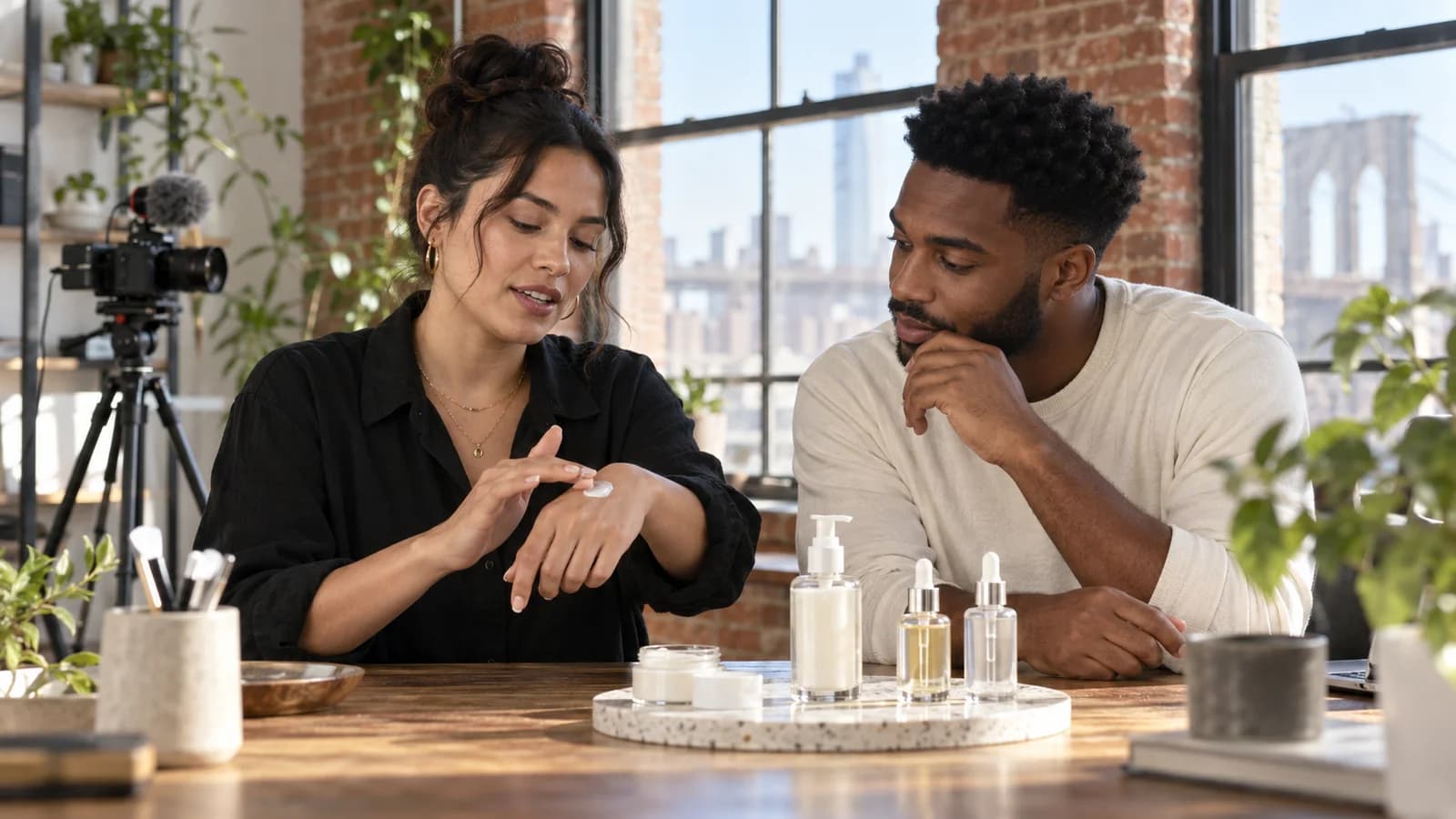
Consider a hypothetical refillable skincare launch: one creator produces a product demonstration for the brand account; another publishes a routine to their own audience. The first is a content-production purchase; the second includes distribution. Request separate quotes for production, organic posting and paid-ad licensing. Write down the channels, territory, license term, revisions and whether raw footage is included. A gifted product does not automatically buy a positive review, a post or advertising rights. Use a factual product-use demonstration instead of scripting an unsupported before-and-after outcome.
Measure the decision the content is meant to change
For the first test, hold the offer and landing page steady while changing the creator or creative angle. A demonstration can address how the product works; a routine can address whether it fits daily life. Track creator-specific links and codes and inspect the completed-order records available to you. Keep returns, discounts and production costs in the commercial review. The FTC guide addresses disclosure of material relationships; include a disclosure review before publication. Neither a platform subscription nor a clear disclosure establishes that a campaign will be profitable.
Build the shortlist around evidence
For each candidate, retain a recent content example, audience geography, working language, category experience and the reason the proposed concept fits. Label estimated audience data as estimated. Compare recent median performance rather than a single viral post, and keep publication reach separate from production skill. A creator can be a strong UGC producer without a large relevant audience. Ask the same scope questions of every candidate so the quoted fees are comparable.
A budget that includes the rights you need
Use a working equation: total pilot cost = creator production + account publication + agreed license + product and shipping + optional media spend + operational costs. These are budget categories, not published market rates. Request current written quotes. Define formats, channels, territory, duration, revisions and raw-file access before approval. For affiliate work, specify the qualifying order and refund treatment. Revenue without attribution should remain unknown, and paid-media ROAS should not be calculated using an unexplained total-revenue number.
A practical New York brief you can adapt
This is an illustrative planning example, not a completed campaign or a rate benchmark. For refillable skincare, write the buyer's question above the creative idea and confirm the commercial scope before any shoot.
| Brief decision | Proposed starting point |
|---|---|
| Customer context | United States, US audience, English or Spanish, USD |
| Language | English or Spanish selected from customer evidence |
| Creative comparison | application demonstration / daily routine |
| Country-specific check | US delivery coverage and truthful product-use claims |
| Evidence to review | completed orders after returns, and product-page questions |
| Rights | Explicit channels, territory, duration and revisions |
Ask shortlisted creators to propose a treatment and a scoped quote. Use their actual capabilities to revise the brief rather than forcing every creator into an identical script.
Questions before the first collaboration
Is CreatorIQ and Aspire automatically the best choice? No. The right route depends on your category, audience, access requirements and operating workflow. Official provider descriptions establish positioning; they are not an independent ranking or a guarantee of eligible local creators.
Can an international creator work on this brief? Possibly, when language, product access, location evidence and the applicable permissions fit. For refillable skincare, verify US delivery coverage and truthful product-use claims before treating the proposal as deliverable.
What should the first review measure? Start with completed orders after returns, and product-page questions. Explain which data is available, which is estimated and which outcome is unmeasured. The example does not predict a campaign result.
Sources and research method
Provider positioning and official advertising guidance were checked on 3 October 2026. The brief and examples are original editorial recommendations, not market statistics or a completed customer case. Named services are independent companies; no affiliation with Influencer Market is implied. Confirm current eligibility, pricing and permission requirements with the respective provider or authority.
Take the next step with Influencer Market
Prepare your real brief, then create a brand account and inspect the creators and collaboration options available for your criteria. Local inventory and eligibility should be verified before committing a budget.
Read the other side of the collaboration: US Brand Deals: Build a Creator Portfolio Brands Can Buy.