

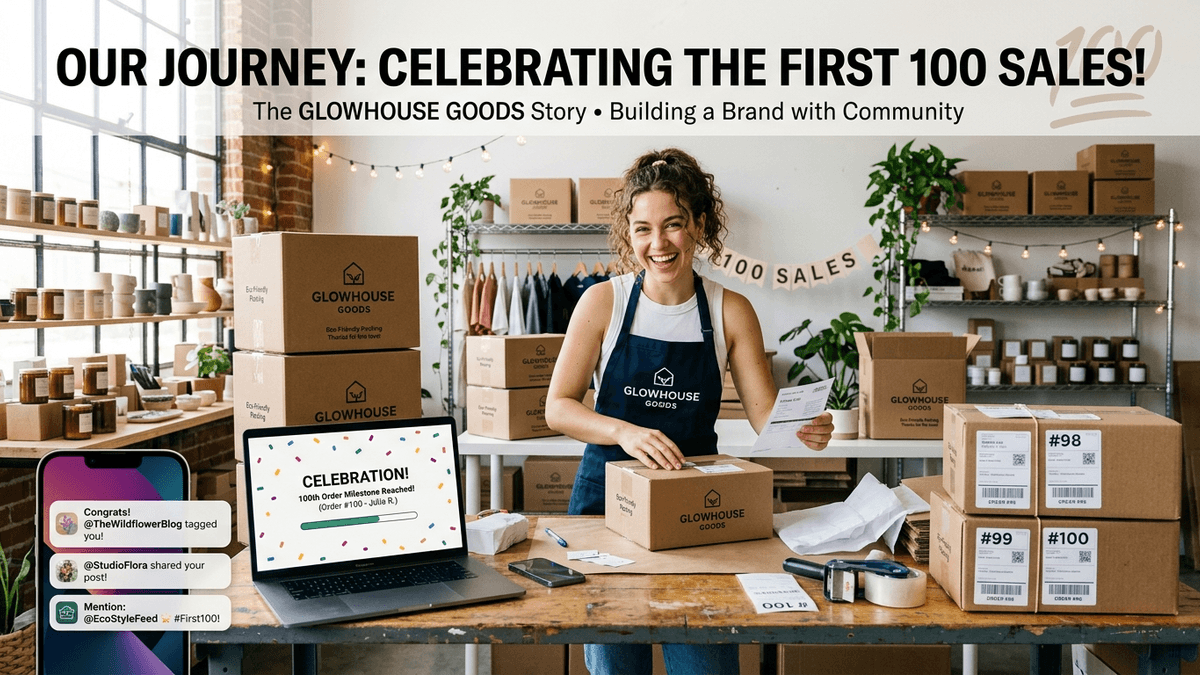
How a brand-new online store can overcome zero trust and win its first 100 paying customers with micro-creator seeding, personal discount codes and on-site social proof.
A new e-commerce brand can reach its first 100 sales without a large ad budget by seeding its product with 15–20 carefully chosen micro-creators, giving each one a personal discount code and turning their content into social proof on the store. The goal at this stage is not reach but trust: proving to cautious shoppers that your brand is real, that the product matches the photos and that someone will answer if something goes wrong.
The zero-trust wall every new store hits
You opened the store, developed good products, set up payments and went live. Yet nobody visits, or visitors leave without buying. E-commerce founders call this the zero-trust syndrome, and it is the most critical threshold a new brand has to cross.
Shoppers are rightly reluctant to enter card details on a site they have never heard of, with no customer reviews and no social proof. In traditional marketing, founders put money into Google or Facebook ads to get the first sales. For a newly launched brand, though, the conversion rate (CR) often stays below 0.2%, and ad spend quickly turns into losses.
Three questions stop the purchase:
- "Is this brand real, or is it a scam?"
- "Will the product actually arrive, and is it as good as the photos?"
- "If I want to return it, will anyone respond?"
Corporate copy on your own website cannot answer these questions convincingly. They have to be answered by independent third-party voices that shoppers already trust: content creators.
Why micro-creators (5K–50K), not macro influencers
Working with celebrities with millions of followers at the first-100-sales stage is expensive and poorly targeted. What you need right now is different:
- High engagement. The bond a creator with 10,000 followers has with their audience can be three to five times warmer than that of accounts with millions of followers.
- Accessible cost. Many micro-creators share detailed unboxing and trial videos in exchange for a gifted product or a modest budget.
- Persuasive recommendations. Followers see a micro-creator as a trusted friend, not a billboard.
The flow is simple:
- A new e-commerce brand selects 15–20 niche micro-creators.
- Each creator receives the product and shares an honest experience.
- Story links and personal discount codes turn that experience into traffic.
- The result is your first 100 loyal customers plus organic social proof.
The 5-stage protocol for your first 100 sales
Stage 1: Pick 20 creators who match your ideal customer profile (ICP)
If you sell organic baby shampoo, follow mothers with babies. If you sell leather wallets, list men's style and minimalist-living creators. Use the Influencer Marketplace discovery page to filter for creators who speak directly to your target audience. Before you shortlist anyone, read their recent comments: an audience that asks real questions is worth more than a large but silent one.
Stage 2: Make a sincere, value-led offer
Replace templated cold emails with personalised offers. For example: "We really like your sustainable-living content. We'd love to send you our new bamboo toothbrush to try. If you like it, we'd be delighted if you shared your honest opinion with your followers."
Keep the tone optional and honest. A creator who feels free to give a genuine opinion produces more credible content than one following a script, and credibility is exactly what a new brand is missing. Ask creators to label gifted and paid content according to the advertising rules of their market.
Stage 3: Create personal tracking codes and incentives
Give each creator a personal 15% discount code, such as AYSE15. It gives followers a reason to buy now, and it shows you exactly how many sales each creator brought in. Test every code before the content goes live.
Stage 4: Add creator content to your store as social proof
With permission, embed the videos and photos creators shared on your homepage and product pages, and add a "Who's talking about us?" section. Agree in writing how and where you can reuse the content; our guide to UGC usage rights explains what to cover.
Stage 5: Turn your first 100 customers into brand ambassadors
Put a handwritten thank-you note in your first orders, and give customers a gift voucher to use on their next order when they tag their experience on social media. Your earliest buyers become a second wave of social proof.
After the first 100: build a lasting sales engine
Reaching 100 sales is only the start. The real skill is turning that momentum into a permanent sales engine:
- Sign a longer sponsorship, for three or six months, with the three micro-creators who drove the most sales.
- Move the videos those creators produced into your Meta ads account and run them as sponsored ads. Our guide to using UGC videos in Meta ads covers rights and testing.
- Capture the traffic reaching your site with email sign-up pop-ups, and set up abandoned-cart flows.
Protect your budget with a secure collaboration setup
In a newly founded brand, every unit of budget matters. You need to eliminate risks such as sending product or money and receiving no content in return. Influencer Marketplace is built for this:
- The contract and brief are agreed in the system.
- Your payment is held in a secure escrow pool.
- The money stays protected until the creator publishes the content and you approve it.
Pre-launch checklist for new brands
Before you start your first campaign, make sure every item below is in place:
- Does mobile checkout take fewer than three clicks?
- Have you set up free shipping or a first-order discount?
- Is a WhatsApp or live support line active?
- Have you tested every creator's personal discount code?
Frequently Asked Questions
How many creators do I need for my first 100 sales?
Start with a list of around 20 creators who match your ideal customer and work with 15–20 niche micro-creators. Choose them for audience fit and genuine engagement rather than follower count, and track each one with a personal code.
Should I pay micro-creators or only send free products?
Many micro-creators share detailed unboxing and trial videos in exchange for a gifted product or a modest budget. Whichever you choose, agree the expectations in writing, and when money is involved, use escrow so payment is released only after the content is delivered and approved.
How do I know which creator brought in sales?
Give each creator a personal discount code, such as AYSE15, and a trackable link. Codes also capture purchases from followers who type the code at checkout instead of clicking.
What should I do after reaching 100 sales?
Sign three- or six-month deals with the three creators who sold the most, run their videos as Meta ads, and capture site traffic with email pop-ups and abandoned-cart flows.
Your first 100 sales are only the beginning: a solid foundation built with the right creator network becomes the engine that takes your brand to its first 10,000. Create a brand account to find micro-creators and run escrow-protected collaborations.