

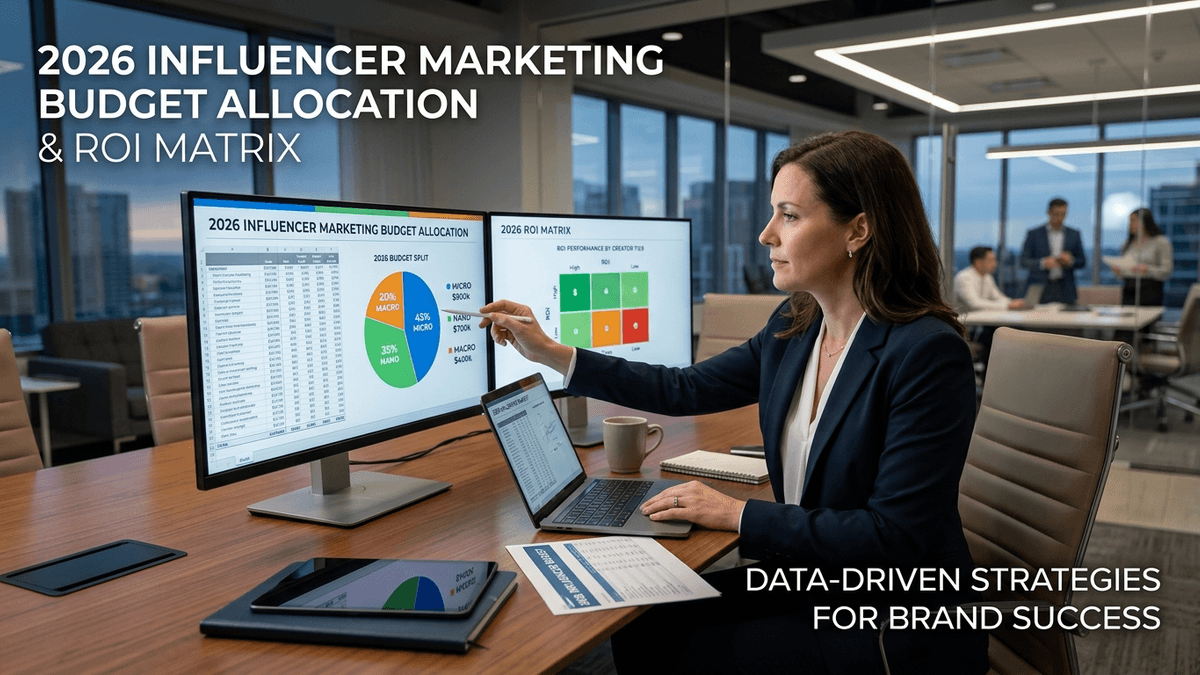
How much of your digital budget to give influencers, how to split it across creator tiers, which hidden costs to include and how to set ROI targets.
Plan an influencer marketing budget the way you would plan an investment portfolio: decide what share of digital spend the channel gets, spread it across creator tiers with a 70-20-10 split, include the hidden costs such as usage rights, and set ROI targets before any money goes out. Budgets spent without a plan tend to disappoint, while budgets run with financial discipline and a clear allocation model can become one of a company's most profitable growth channels. This guide shows how to structure the budget to 2026 standards.
For many companies, influencer marketing still feels like a black box. Questions such as "How much should we pay an influencer?", "What percentage of our digital budget should go to this channel?" and "Should we pay one celebrity or dozens of micro creators?" often spark debates between finance and marketing. The sections below answer each of them.
How much of your digital budget should go to influencers?
According to global and local market research, fast-growing e-commerce and consumer brands allocate between 20% and 35% of their total digital marketing budget to creator and influencer collaborations.
A sample balanced digital marketing split looks like this:
| Channel | Share of digital budget |
|---|---|
| Meta and Google performance ads | 45% |
| Influencer and creator collaborations | 25% |
| SEO and organic content | 15% |
| Email and customer retention | 15% |
The most important point: the influencer budget is not a rival to performance advertising, it is its fuel. UGC videos produced by creators become creative assets for your paid campaigns. Our guide to using UGC videos in Meta ads explains how to license and test them.
Spread portfolio risk with the 70-20-10 rule
Tying the entire budget to one celebrity account is a high-risk financial gamble. Split it instead:
- 70% backbone investment (micro and nano creators): Put the largest share into highly engaged creators with niche audiences, mainly in the 10K–100K follower range. This group delivers steady sales, authentic social proof and a low-cost stock of content.
- 20% growth and authority (mid-tier and macro creators): Reinforce brand prestige and broad awareness with one or two well-known names in your sector in the 100K–500K range.
- 10% innovation and testing: Keep a risk budget for new platforms and experimental formats, such as TikTok trends, live shopping and podcast sponsorships.
Calculate every budget line, including hidden costs
An influencer campaign is not only the fee paid to the creator. A healthy budget sheet includes five lines:
- Creator fee: producing the content and publishing it on the creator's organic profile.
- Product and shipping costs: the cost of the products being promoted and insured shipping.
- Usage rights and whitelisting: the right to run the video as a sponsored ad from your brand's ad account for 30, 60 or 90 days. This typically adds 30–50% of the base fee.
- Operational management and platform assurance: contract preparation, escrow protection and campaign management infrastructure.
- Performance incentives (affiliate commission): success bonuses for creators who exceed the agreed sales target.
Budgets that only cover the first line tend to run over once usage rights, logistics and incentives come into play, so price all five from the start.
Define ROI and ROAS targets before you spend
Set your success criteria first:
| Campaign type | Primary metric | Expected financial output |
|---|---|---|
| Sales-focused (performance) | Purchases, ROAS | At least 3 in revenue for every 1 spent (3x ROAS) |
| Content-focused (UGC) | Number of videos produced | Around 70% saving per video versus studio production cost |
| Awareness | Cost per 1,000 people reached (CPM) | A lower CPM than sector TV or outdoor advertising |
Agree these targets with finance before launch, so the campaign is judged against the goal it was designed for.
Review the budget every quarter
Do not lock the budget for the whole year. Reallocate it each quarter (Q1, Q2, Q3, Q4) based on the data:
- Increase budget for winning creators: give the creators with the highest ROAS 50% more budget in the next quarter.
- Cut underperformers: pull budget from categories that fall below your average click and sales thresholds.
- Adjust for seasonality: in e-commerce, reserve 40% of the budget for peak periods such as November (Black Friday) and Mother's Day.
Use a platform approach for transparent budgeting
In traditional agency models, as much as 40% of a budget can disappear into intermediary commissions and invisible operating costs, and companies cannot see how much the creator actually receives. With Influencer Marketplace:
- Transparent pricing shows you the fees creators actually request.
- You manage the campaign budget down to the last detail, without surprise commissions or hidden costs.
- For brands operating in Türkiye, invoicing, tax compliance and withholding (tevkifat) processes are handled on the platform to a corporate standard.
Frequently Asked Questions
What percentage of the marketing budget should go to influencer marketing?
Global and local market research indicates that fast-growing e-commerce and consumer brands allocate 20–35% of their digital marketing budget to creator and influencer collaborations. A balanced sample split gives the channel 25%.
What is the 70-20-10 rule for influencer budgets?
It allocates 70% to micro and nano creators for steady sales and content, 20% to mid-tier and macro creators for authority and awareness, and 10% to testing new platforms and formats. It spreads risk instead of tying everything to one account.
How much do usage rights add to an influencer fee?
Running a creator's video as a sponsored ad for 30, 60 or 90 days typically adds 30–50% of the base fee. Agree these rights in the contract before production.
Should we pay one celebrity or many micro creators?
Putting the whole budget into one celebrity is a high-risk gamble. Most of the budget works harder spread across micro and nano creators, with one or two larger names reserved for authority and reach.
To use your budget efficiently and plan a campaign for your sector, see how Influencer Marketplace works and create your first campaign.